Routebase: One Living Spec for Docs, Mocks & Tests
Routebase keeps your API docs, mocks, and contract tests in sync from one living spec. Run drift monitoring, mocks, and CI suites.
✦Key takeaways
- 1Routebase treats one OpenAPI spec version as the source of truth for docs, mocks, tests, and monitoring.
- 2It catches contract drift by replaying live responses against the published spec and producing field-level diffs.
- 3Specs are managed like code: branch, review, merge, with breaking-change detection before shipping.
- 4A built-in MCP server lets AI agents read and act on the same spec under your team permissions.
Why I built Routebase from drift
I kept running into the same failure mode: your API contract doesn’t live in one place. It’s split across design tools, documentation portals, mock servers, contract tests, and monitoring dashboards. Each copy changes on its own schedule, so the “real” contract slowly diverges from what consumers think it is.
That drift is where bugs hide, and it’s also why fixing a single tool rarely helps. If the pain happens between tools, then the contract needs to become the shared artifact that every step references—design, docs, mocks, tests, and monitoring—so they stop guessing and start validating against the same version.
Routebase is my answer to that problem: one living source derived from a visual OpenAPI editor, where publishing a spec version generates the docs portal and mock server, and where tests and monitors validate live responses against that same version. The result is a pipeline that behaves like code review: change the contract once, then catch drift before consumers do.
The challenges of API drift
Most API teams don’t actually have an “API source of truth”—they have multiple representations of the same contract. The OpenAPI file is edited in one place, the docs portal gets updated later, the mocks get adjusted when someone remembers, and the contract tests often lag behind the latest changes.
When a field changes in production, the failure typically shows up somewhere downstream: a frontend team sees an unexpected payload shape, a QA run passes against an older contract, or monitoring notices too late. Even when each tool is correct in isolation, the overall system breaks because the contract versions aren’t aligned.
There’s also a workflow mismatch. Engineers want to treat changes like code—branch, review, and merge—while many API documentation and testing workflows are copy/paste oriented. The contract becomes hard to review, hard to validate consistently, and easy to accidentally ship with breaking changes.
What Routebase does for your API
Routebase keeps your API lifecycle anchored to one living OpenAPI spec. You design the contract in a visual OpenAPI editor (or import the spec you already have), then publish a version. From that published version, Routebase generates the docs portal and mock server, and it uses the same version for contract tests and drift monitoring.
The practical outcome is that changes don’t propagate by manual updates across tools. They propagate by publishing. When you change the contract once, the docs, mocks, test suites, and monitors follow in a single publish, so you can validate what’s real against what you intended.
Routebase also focuses on the “between tools” gap: it replays live responses against the published spec and flags divergences with field-level diffs. Instead of waiting for a consumer to report a mismatch, you get a concrete diff showing what drifted and where.
Finally, Routebase makes the spec usable by agents. Each workspace ships a built-in MCP server, so AI agents can read and act on the same source of truth—designing endpoints, running test suites, and linting specs—under your team’s permissions, without glue code.
- ✓Visual OpenAPI editor with import support
- ✓Docs portal generation from published spec versions
- ✓Mock server generation from the same spec version
- ✓Contract tests and drift monitoring validated against published versions
- ✓Field-level diffs for drift detection
- ✓Branch/review/merge workflow for specs with breaking-change detection
- ✓Built-in MCP server so AI agents use the same spec
Getting started with Routebase
Design the contract
Create or import your OpenAPI 3.1 spec using the visual editor. Routebase is designed so you’re working with a spec that can be published as a version, rather than a file that multiple tools edit independently.
Publish a spec version
Publish the version you want to validate against. Routebase generates the docs portal and the mock server from that published version, and it also sets up the same version for contract tests and monitoring.
Run contract tests and monitors
Execute test suites in CI (using the built-in CLI for automation) and run drift monitoring that replays live responses against the published spec. When something diverges, Routebase flags it with field-level diffs.
Build with mocks and run in parallel
Frontend and backend teams can build against the realistic mock server while QA and CI validate the same contract version. This reduces “it works on my mock” issues caused by version mismatches.
Let agents work from the same truth
Use the built-in MCP server so AI agents read and act on the same source of truth. Agents can help design endpoints, run test suites, and lint specs using your team’s permissions.
Who benefits most from Routebase
API Platform Teams
Teams responsible for many endpoints need consistent contracts across docs, mocks, tests, and monitoring. Routebase’s single-spec publishing model reduces drift and makes discrepancies actionable via diffs.
Founders Shipping Faster
If you’re trying to ship without building a custom “API release pipeline,” Routebase provides a lifecycle approach—design, publish, test, monitor—so you can catch breaking changes before they hit consumers.
Frontend/QA Engineers
When frontend and QA depend on stable payload shapes, mocks and contract tests tied to the same published spec help avoid chasing mismatched versions across environments.
AI-Augmented Dev Teams
If you already use AI agents for coding assistance, Routebase’s built-in MCP server lets agents operate on the same spec that your CI validates, without extra glue code.
Routebase vs Postman, SwaggerHub & Insomnia
Routebase is built around a single living OpenAPI spec version that drives docs, mocks, contract tests, and drift monitoring together. Tools like Postman, SwaggerHub, and Insomnia can help with API testing or documentation workflows, but they typically don’t enforce the same “one published spec drives everything” lifecycle.
| Feature | Routebase | Postman | SwaggerHub | Insomnia |
|---|---|---|---|---|
| Single living spec drives docs+mocks+tests | Yes—publish one spec version; docs portal, mock server, tests, and monitors follow together. | Primarily request collections and test scripts; contract-to-mocks/docs syncing is not lifecycle-first. | API design and documentation management; end-to-end drift monitoring and mock/test generation is not the same model. | API client and request workflows; typically not a full lifecycle contract source with drift diffs. |
| Drift monitoring with field-level diffs | Yes—replays live responses against the published spec and flags divergence with field-level diffs. | You can run tests, but field-level drift detection against a published spec version isn’t the default lifecycle. | Focuses on design/documentation collaboration more than automated drift replay with diffs. | Supports request execution; drift detection is usually custom rather than built as contract drift monitoring. |
| Spec workflow like code review | Branch, review, merge with breaking-change detection before shipping. | Versioning exists for collections, but breaking-change detection against a canonical spec lifecycle isn’t the same. | Collaboration features exist, but the lifecycle enforcement across mocks/tests/monitoring differs. | Works as a client; spec governance is not its core workflow. |
| AI agent access via MCP server | Yes—each workspace ships a built-in MCP server for agents to read/act on the same spec. | Automation exists via scripting, but MCP-based agent access to a single living spec isn’t built as a core feature. | Agent workflows depend on external integrations rather than a built-in MCP server model. | Agent access is typically via external tooling; not a built-in MCP server workflow. |
| Pricing (examples from context) | From $0 to $39 (tiers shown on Routebase site). | Pricing varies by plan; not provided in the supplied context. | Pricing varies by plan; not provided in the supplied context. | Pricing varies by plan; not provided in the supplied context. |
Real-world use cases
Platform team catching drift before release
After publishing OpenAPI v1.4.0, Routebase runs drift monitoring that replays live responses and produces a field-level diff when something changes (e.g., a field added or missing in the response).
Frontend and backend building against mocks
A frontend team builds against the mock server generated from the published spec, while QA runs contract suites in CI against the same version—reducing mismatches caused by stale mock payloads.
Founder-led team enforcing breaking-change checks
During spec review, Routebase supports a branch/review/merge workflow with breaking-change detection before anything ships, so you can catch contract issues earlier in the workflow.
AI agents designing endpoints and running tests
With the built-in MCP server, an agent reads your published spec, proposes endpoint changes, runs test suites, and lints specs under your team’s permissions—using the same source of truth as CI.
Frequently asked questions
Try Routebase
Routebase — Routebase treats one OpenAPI spec version as the source of truth for docs, mocks, tests, and monitoring.
More from the blog
All articles
Fontwise: Bulk Typography Fixes in Figma
Fontwise is a Figma typography plugin for bulk font replacement, mixed-font text editing, missing text style fixes, and 350+ pairing previews.
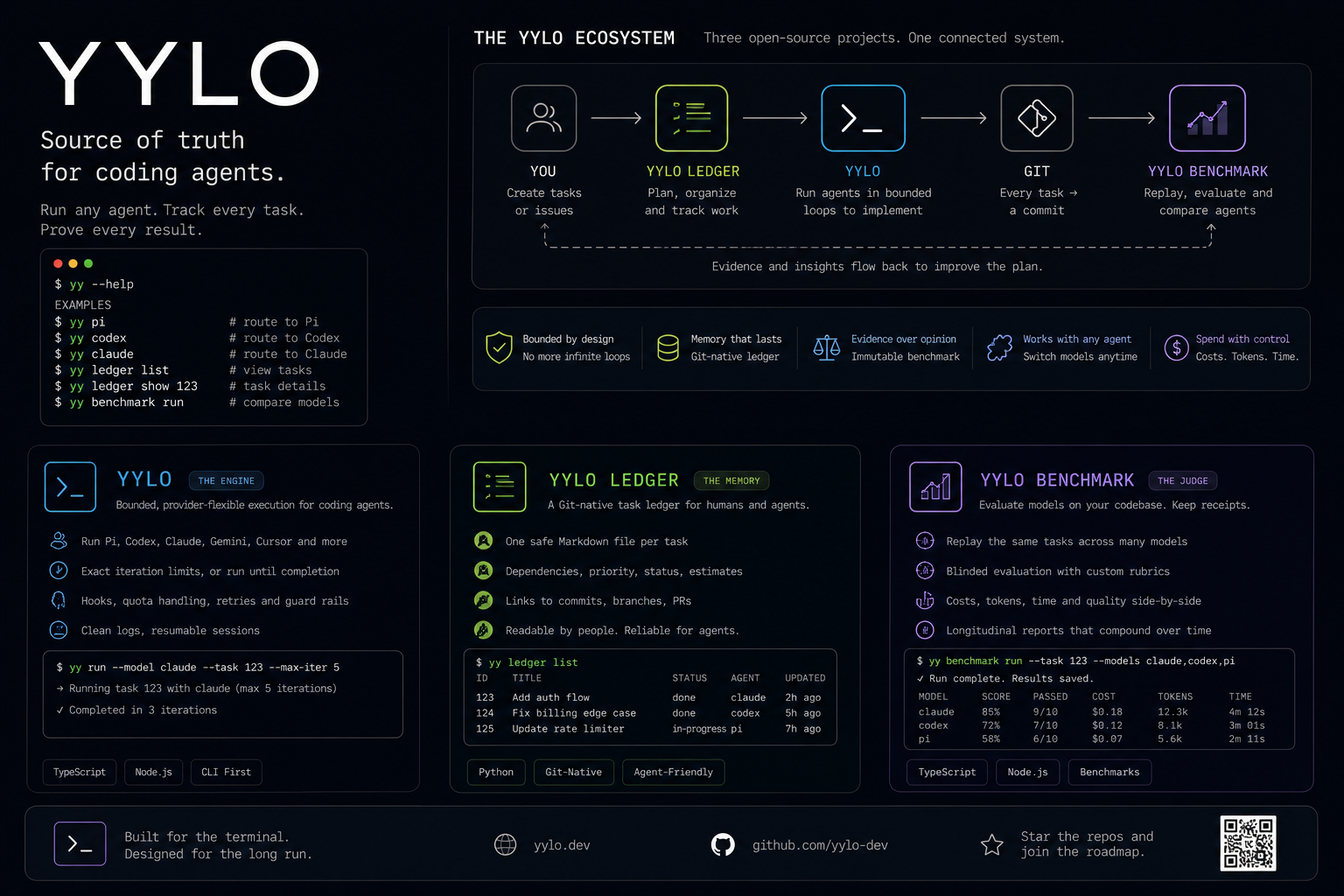
YYLO: Bounded AI Coding Orchestration + Git Memory
YYLO coordinates AI coding agents with bounded loops and Git-native task records. Keep durable evidence, guarded merges, and reviewable progress.